
How did growing up on a farm in Indiana shape the way you approach community development today?
My entire family (mom, dad, grandma, grandpa, aunts, uncles, and cousins) were farmers, and we were taught to “leave the land better than you found it.” My Uncle Emil farmed until he was 99 years old and reminded me of this obligation every year when I made an annual trip to Indiana to harvest the corn and beans with him.
What led you to economic development work with Native American Tribes?
I worked for 20 years as a Human Resource Manager for manufacturing companies in small towns in Indiana and Ohio, so I grew passionate about job creation, job retention, and community development. When I left the field of HR management to run a nonprofit organization that focused on workforce development, I became quite good at grant writing, so I started a nonprofit of my own with my mom so we could help save small towns like the one where we grew up.
What was your vision for the look and feel of the UMUT Comprehensive Economic Development Strategies Plan (CEDS)?
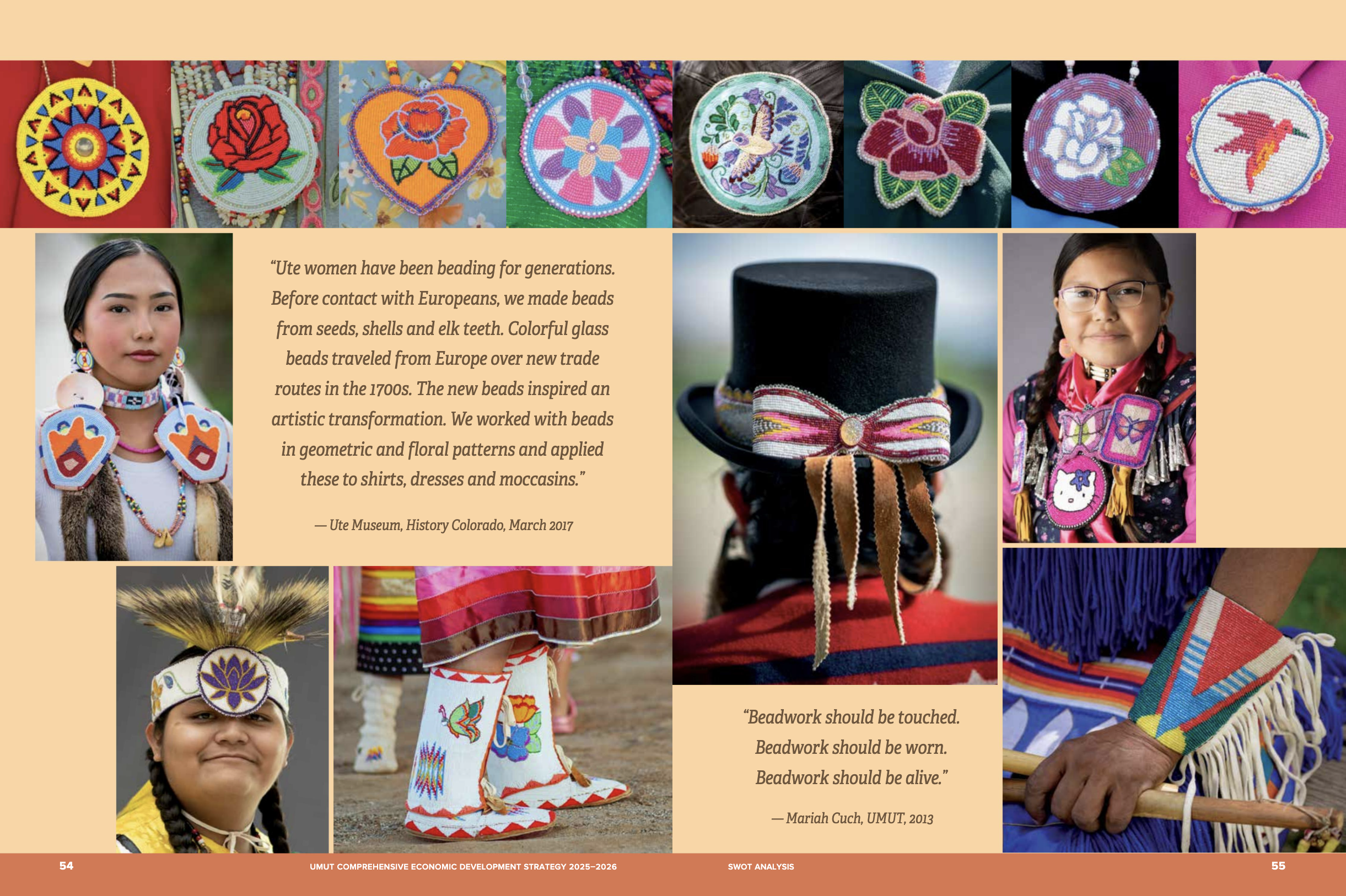
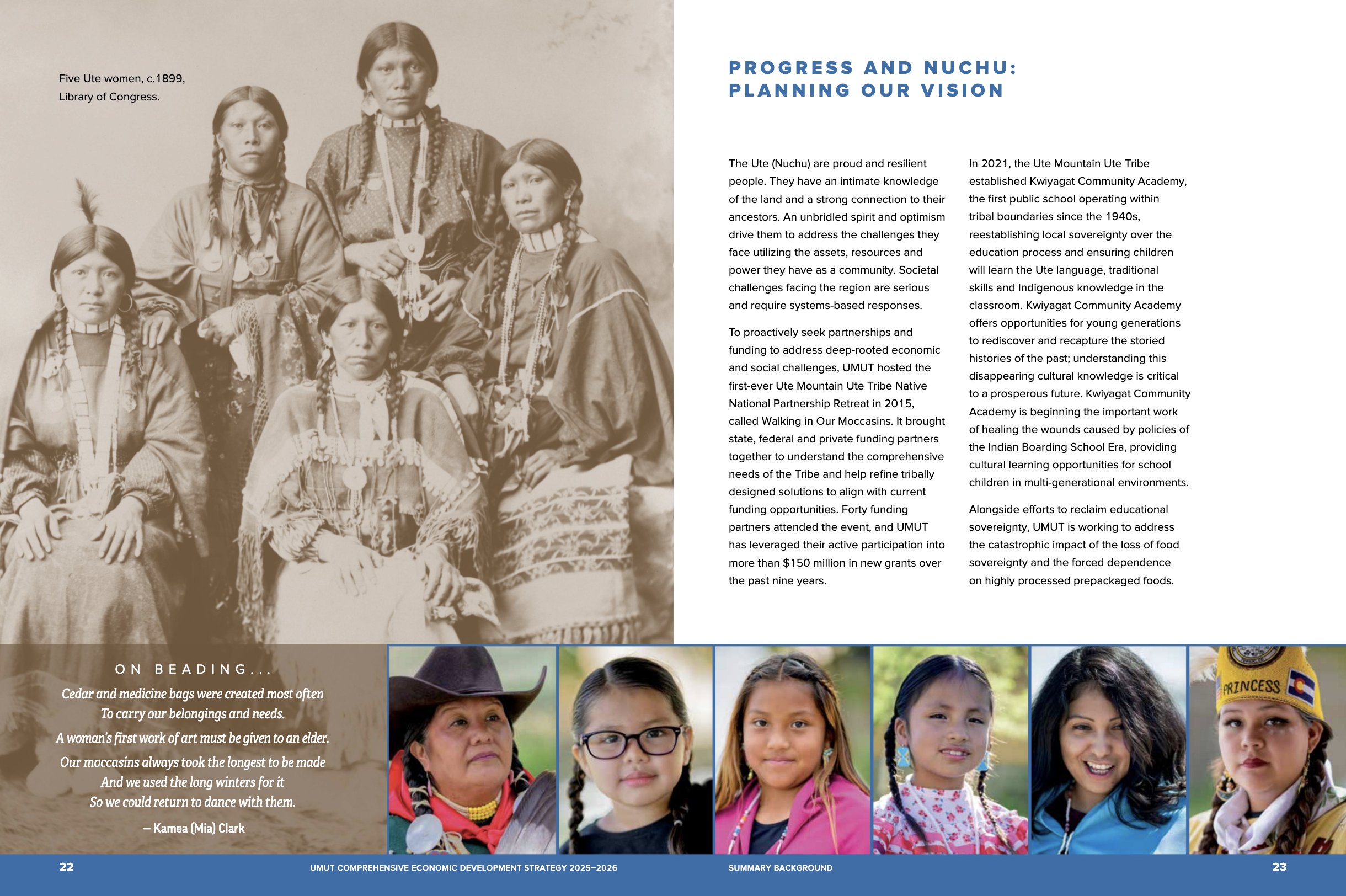
After working with Native American Tribes for 10 years, I learned that the most important elements of a successful project for indigenous people are visual storytelling and the integration of culture, tradition, and history. When we got our first contract to write a CEDS we merely improved on the Word Document that had been done the year before, but I was not satisfied with it, so each year we started making it better integrating stunning photography by Anthony Two Moons – a professional Native American photographer from New York City and hiring an extraordinary graphics designer to showcase the people, land, culture, challenges and accomplishments. When federal agencies like the US Department of Interior/Bureau of Indian Affairs and US Department of Commerce recognized our CEDS as a “gold standard” to set the ideal that other communities should strive to reach, I knew we had developed a product that promised “to leave the land better than we found it.”