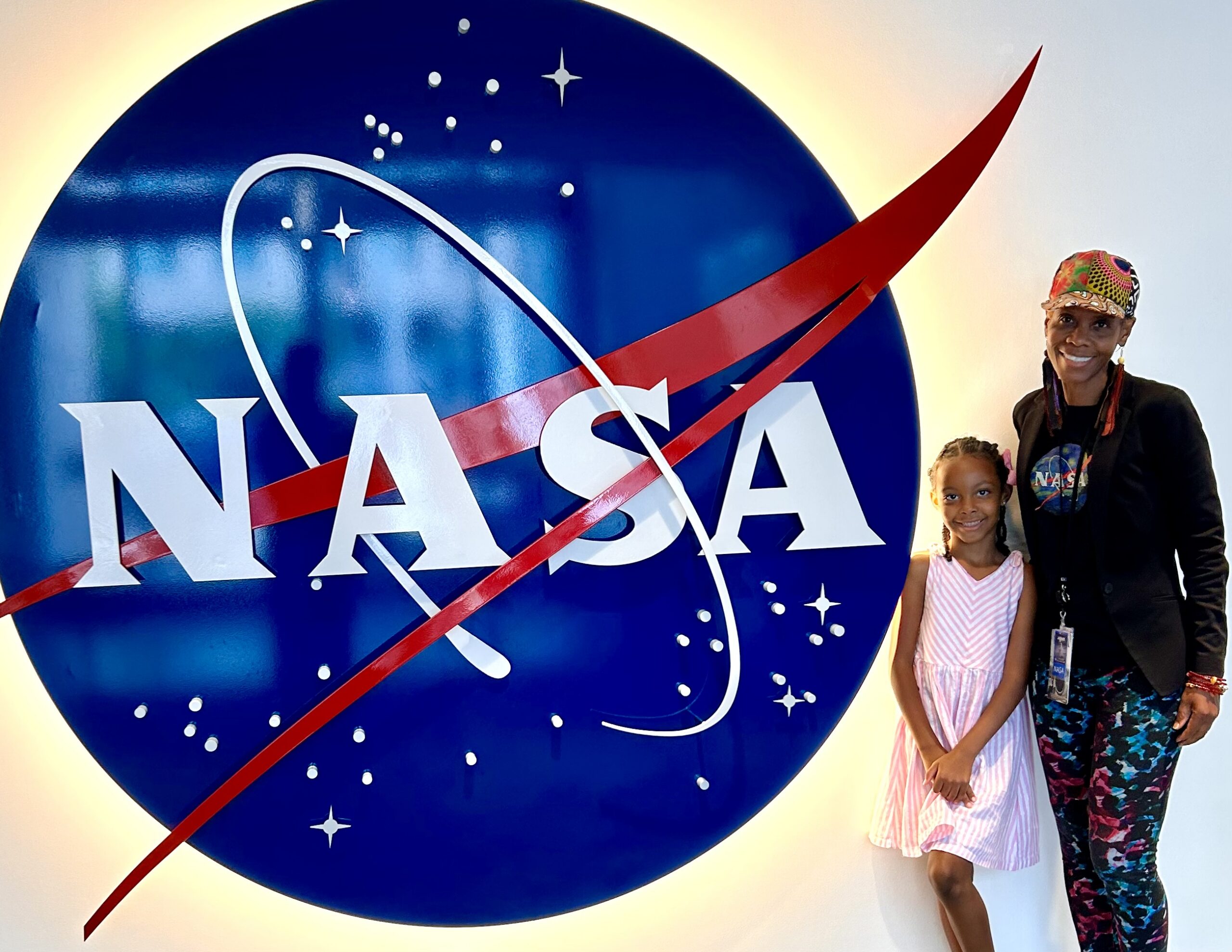
You’ve been described as “bridging technical innovation with the power of stories.” How do you see your role as a storyteller?
NASA is at the forefront of advancing research, development, and technology in space exploration, aeronautics, engineering, science and planetary exploration. Stories help translate complex systems and discoveries into narratives that people can relate to.
Storytelling is one of the most effective ways to engage audiences across platforms. Without documentation, capturing events, and archival preservation many achievements would never reach the masses.
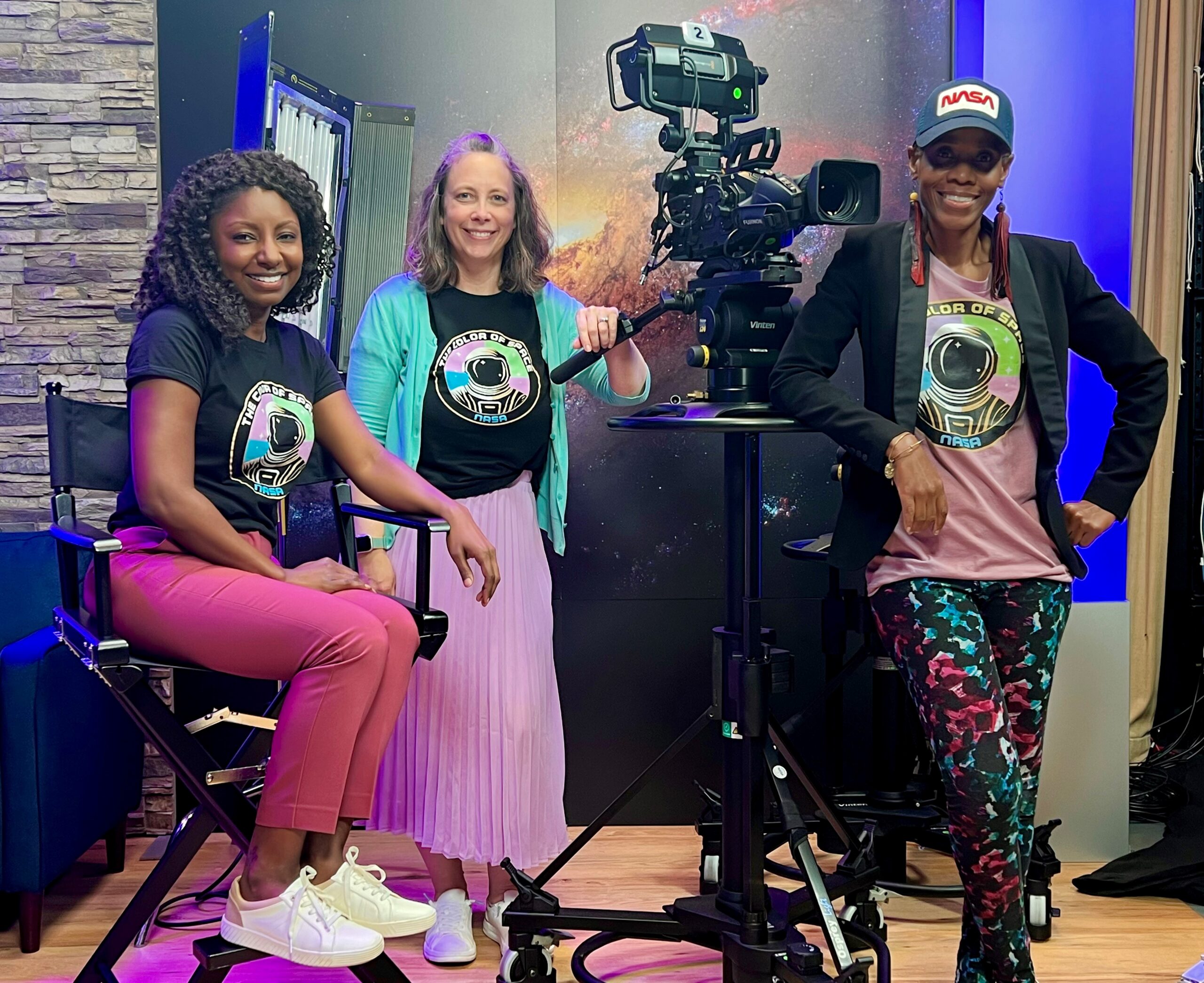
I work with writers, producers, videographers, editors, executive producers, audio and TV engineers, photographers, communications strategists, historians and a team of people who make that possible. My role on the team as a Video Librarian and Media Asset Manager is to organize, manage and provide footage and content to support NASA and independent producers.
How do you work with directors and producers to understand their creative vision and find the right footage to support it? And have you ever felt starstruck (sorry for the pun) with any of these collaborators?
Requests for high profile projects come through the NASA Office of Communications. I work with the NASA Director of Engagement to meet approval. I also receive inquiries directly via email and by phone. Once I gather the details that are required to conduct a search, I have access to a variety of internal and external databases and sites to share resources to support inquiries.
There are times when I am invited to attend screenings with celebrities, but I don’t find myself being starstruck. Prior to working at NASA, I worked in the entertainment industry as a production coordinator and television camera operator at Black Entertainment Television (BET). I’ve worked on many shows with high profile people in the music and TV industry. Also, by working in media in Washington, D.C., I have worked on events with high profile politicians, including two U.S. Presidents. As part of my job, I am expected to conduct myself professionally. At the end of the day, they are people like everyone else. They’re just famous.
What does it mean to you personally to be the bridge between NASA’s historical archives and the stories that reach global audiences?
At times, I feel like I am simply doing my job to meet and support the needs of the NASA Office of Communications, production companies, and private citizens who contact me for footage, but I am reminded that I am part of something much bigger. It dawns on me when I’m watching television or sitting in a movie theater and suddenly recognize a project that I contributed to and the multiple platforms that allow those stories to be viewed by audiences around the world.